Key takeaways
- Microneedling works mechanically, creating controlled micro-injuries that rebuild collagen: it is the better fit for acne scars, texture and firmness.
- Chemical peels work chemically, removing layers of skin to correct pigmentation, dullness and surface damage.
- At Institut V Esthétique in Montreal, microneedling is done with a professional pen and peels with a professional solution matched to your skin; the price of each treatment is confirmed at your free consultation.
- Downtime differs: brief, passing redness after microneedling, versus a few days of flaking after a chemical peel.
- Both are planned over several sessions, the number set at your consultation, and they are often combined rather than opposed.
How does microneedling rejuvenate the skin?
Microneedling creates thousands of controlled micro-perforations in the dermis. The skin reads that as an injury and responds by producing new collagen. The needles are not what smooths your skin: the repair response they trigger is.
At Institut V Esthétique, microneedling is done with a professional pen whose depth is finely adjustable, so we can stay superficial around the eyes and work deeper on the cheeks and on scars. The exact setting is decided for your skin, at your consultation.
What skin concerns does microneedling treat best?
- Acne scars and atrophic marks, which respond to deep collagen stimulation
- Skin texture, enlarged pores and uneven surface
- Fine lines and early firmness loss
- Stretch marks and superficial scars on the body
What it does not do well: pigment correction. If your main concern is melasma or dark spots, a peel will serve you better.
How do chemical peels resurface the skin?
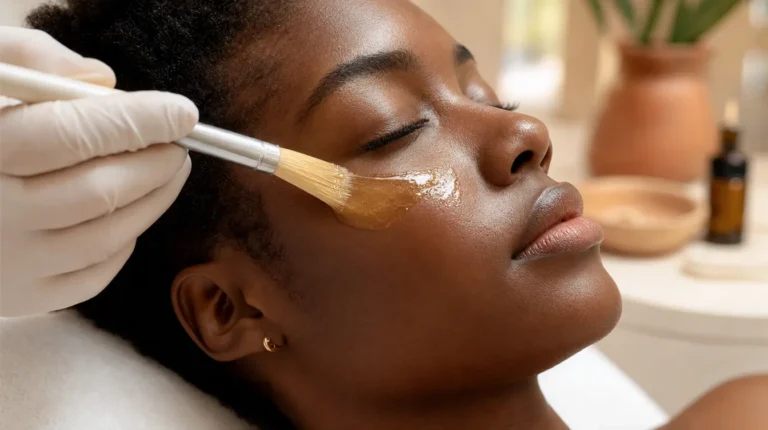
A chemical peel applies an acid solution that causes controlled exfoliation. It removes dead cells and speeds up cell turnover, which corrects what sits in the surface layers: dark spots, dullness, uneven tone and fine texture.
Three settings decide everything: the acid, its concentration and the contact time. That trio determines the depth, and therefore the results and the recovery. At Institut V we work with a professional peel chosen for your skin type.
What skin concerns do chemical peels treat best?
- Hyperpigmentation, melasma and post-inflammatory dark spots
- Dull, uneven skin tone
- Surface acne and congestion
- Fine lines and sun-related surface damage
One point matters here in Montreal, where a large part of our clientele has deeper skin tones: many classic peels were designed for fair skin and carry a real risk of rebound pigmentation on darker skin. The peel and its strength are therefore chosen for your Fitzpatrick type, assessed at your consultation, to limit the risk of dark patches on Black, mixed and melanin-rich skin.
Microneedling vs chemical peels: what are the key differences?
| Microneedling | Chemical peel | |
|---|---|---|
| Mechanism | Mechanical micro-injuries | Controlled chemical exfoliation |
| Best for | Acne scars, texture, firmness | Pigmentation, dullness, surface damage |
| Main target layer | Dermis | Epidermis, deeper depending on protocol |
| Downtime | Brief, passing redness | A few days of flaking |
| Typical plan | Several sessions, planned at consultation | Several sessions, planned at consultation |
| Price | At your free consultation | At your free consultation |
How do downtime and recovery compare?
Microneedling: expect pink to red skin, similar to a mild sunburn, fading quickly. Skip makeup while the skin settles, pause sauna, pools and intense workouts, and wear sunscreen daily.
Chemical peel: the peel itself is quick, but the days after are the real story. Skin tightens, reddens, then sheds for a few days. Strict sun protection is non-negotiable, and you should pause retinoids, acids and any at-home exfoliation during that window.
Which is safer for sensitive or darker skin?
It depends on what your skin reacts to. Reactive, easily flushed skin often tolerates microneedling better, because there is no acid involved. Pigmentation-prone skin, including deeper skin tones, is the opposite case: the wrong peel can trigger dark patches, which is why the peel choice matters more than the peel itself.
In both cases the answer comes from an in-person look, not from a general rule. That is what the consultation is for: it tells us which protocol your skin can actually handle.
What results can you expect, and how fast?
After microneedling, glow and smoothness often show up fairly early. Acne scars and lines need more time, and collagen keeps rebuilding for several weeks after your last session.
After a peel, the visible change often arrives as the skin finishes shedding: brighter, more even tone. Pigmentation is corrected progressively, session after session.
Can you combine microneedling and chemical peels?
Yes, and that is often the strongest plan. A peel works the surface and pigmentation while microneedling rebuilds collagen underneath. The two are scheduled at different moments in the plan so the skin is never overloaded. In practice, many clients alternate rather than choosing.
Not sure which one your skin needs? Book a consultation with Institut V Esthétique, 6532 Beaubien East in Montreal, or call us at (438) 900-0919. We assess your skin and tell you what is realistic. You can also read our guides on microneedling sessions and recovery and chemical peel recovery.
Frequently asked questions
Is microneedling or a peel more painful?
Microneedling feels like light prickling and vibration, with bony areas such as the forehead and nose more sensitive. A peel is usually felt as tingling or warmth. We adjust the comfort as we go.
Which one should I try first?
If pigmentation and tone are your concern, start with a peel. If scars, texture and firmness are the concern, start with microneedling. If both are, we usually start with the peel and introduce microneedling as the plan moves forward.
Can I do these treatments in summer?
Yes, with disciplined sun protection. If you have sun exposure planned, schedule the session afterwards, since fresh skin and strong UV do not mix.
How many sessions will I need?
The number of sessions is set at your consultation, based on your concern and how your skin reacts after the first session.
In short
Microneedling rebuilds collagen to resurface scars, texture and firmness. Chemical peels exfoliate to correct pigmentation and dullness. Neither wins in general; the right one depends on your skin and your goal. At Institut V Esthétique, both are available under the same roof on Beaubien, and the consultation decides which protocol your skin needs.
Ready to find out which treatment suits your skin? Book your free consultation at Institut V Esthétique or call us at (438) 900-0919.