Lipocavitation vs fat freezing: two principles, one goal
By Alexandra Vivanco, founder and head esthetician at Institut V Esthétique. She holds a DEP en esthétique from École Antoine-de-Saint-Exupéry (2018); Institut V and its founder are APESEQ members. Updated October 14, 2026
Lipocavitation and fat freezing, also called cryolipolysis, are different approaches to non-surgical body contouring. Lipocavitation uses high-frequency ultrasound, while fat freezing uses cooling. Institut V offers lipocavitation; it does not offer cryolipolysis. This comparison is for people considering a localized fat deposit. The clinic’s lipocavitation page covers its service, while the sections below distinguish the clinic’s protocol from medical-device guidance.
The word “non-surgical” is a broad category, not a description of one device or treatment plan. A comparison can identify the method and where it is offered, but it cannot rank options for everyone. For a useful decision, keep the method, clinic service, and personal health considerations separate rather than treating them as one claim.
How lipocavitation works, in Institut V’s description
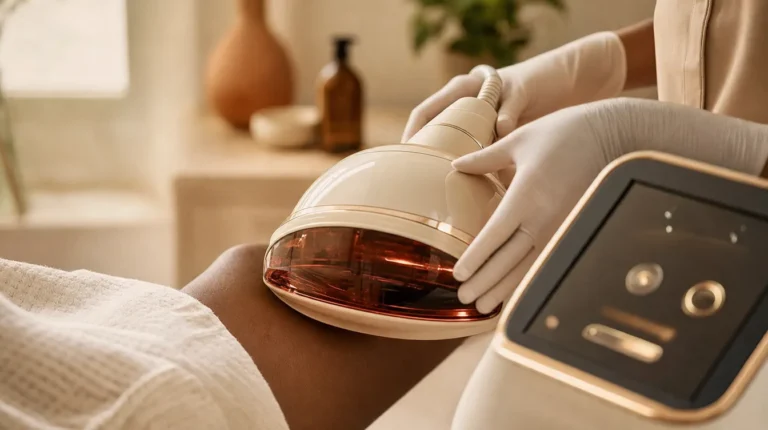
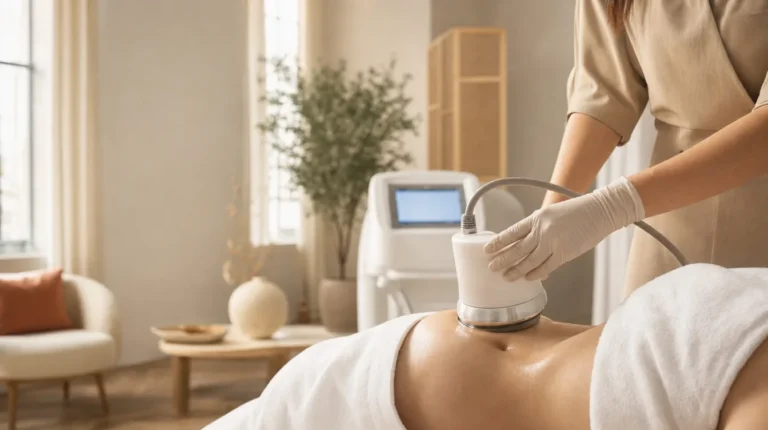
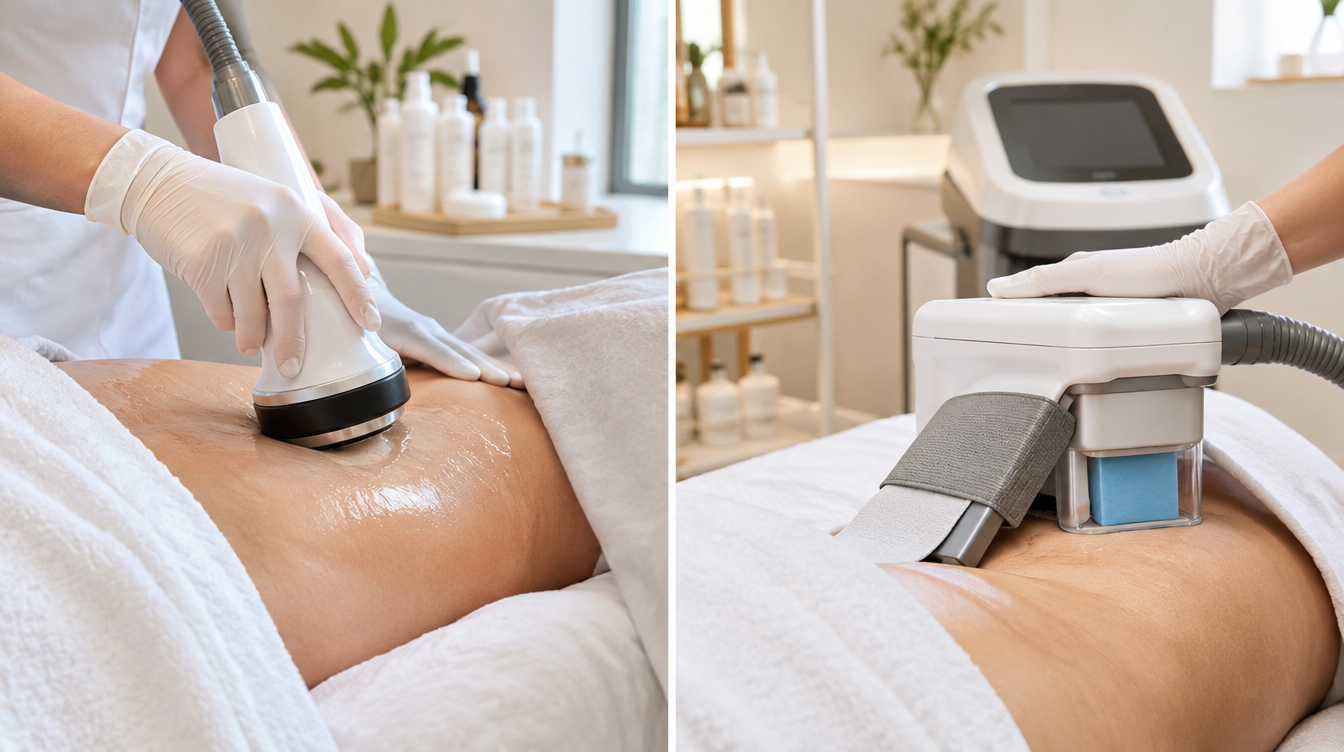
Institut V describes lipocavitation as a non-invasive treatment that uses high-frequency ultrasound to create microbubbles inside fat cells, also called adipocytes. That is the clinic’s description of the method. It should not be expanded into claims that fat cells burst, that the body eliminates them through a particular pathway, or that a specific amount of fat will be removed. The comparison that can be made here is about the technologies: lipocavitation uses ultrasound energy, and cryolipolysis uses cold.
Adipocytes is the technical term for fat cells. Here, the word explains what the clinic’s description refers to; it does not quantify how many cells are affected. A mechanism description is also different from an outcome report. Keeping those ideas separate helps readers distinguish an explanation of how a service is presented from claims about a measurable change in appearance.
Readers comparing clinic services can review Institut V’s body treatments; lipocavitation is the service relevant to this article.
Lipocavitation is priced according to the treatment area and protocol. The treatment is painless, and Institut V guarantees optimal results.
Body contouring is also distinct from other aesthetic services. For example, the clinic’s laser hair removal in Montreal addresses hair removal, not localized fat. Keeping those services separate helps readers compare the right treatment category to their concern.
How fat freezing works, and what the AAD says
Fat freezing, or cryolipolysis, is a non-surgical approach that uses cooling to address localized fat. It is not the same technology as ultrasound-based lipocavitation. Readers considering cryolipolysis need information about the specific device and provider offering it.
The AAD’s page on non-invasive fat reduction discusses medical treatment devices. It says ultrasound fat reduction involves “between 1 and 3 treatments.” That wording is tied to the medical devices discussed there; it is not a schedule for every ultrasound-based service or a result statement for Institut V. The AAD reference is linked in the Sources section so readers can review its wording in context.
Side-by-side comparison: ultrasound vs cold
| Question | Lipocavitation | Fat freezing (cryolipolysis) |
|---|---|---|
| Principle | High-frequency ultrasound; Institut V describes microbubbles inside adipocytes. | Cooling-based body contouring. |
| How to compare a treatment plan | Ask about the treatment area, protocol, and relevant health history. | Ask the provider about the specific device and its plan. |
| Evidence context | Institut V’s description refers to its service. | Read the AAD guidance within its medical-device scope. |
This table compares methods and availability, not efficacy. It cannot determine a person’s eligibility or predict an outcome. A reader should check which technology a claim describes, then ask the provider about the relevant health history and treatment area. The same treatment label can appear in different contexts, so the device and setting remain important when interpreting a comparison. Use the table as a starting point for questions, not as a treatment recommendation. A general method description and a provider’s assessment serve different purposes: one clarifies a category, while the other considers the service and the person’s circumstances.
Why session counts differ between devices
A session count is meaningful only when the device and protocol are clear. The AAD’s range belongs to medical ultrasound devices; Institut V sets its lipocavitation protocol at consultation. These are not competing estimates for one identical service. Ask what equipment the guidance covers and whether it matches the service being considered.
A number may refer to visits for one area, a treatment cycle, or a broader plan. Without that context, it cannot tell a reader how many visits they personally need. Keep a quoted figure attached to the device and source that provide it, then ask the provider whether that information applies to the service under discussion. This comparison does not supply a personal schedule.
What are the alternatives to liposuction?
People looking for alternatives to liposuction may encounter non-surgical approaches that use ultrasound, cooling, or heat. At a high level, those labels describe different inputs: ultrasound uses sound energy, cryolipolysis uses cooling, and radiofrequency uses heat. These are method categories, not interchangeable treatments or promises of results. The device, treatment area, eligibility criteria, and protocol matter; the word “non-surgical” alone does not show which service is appropriate. This article compares ultrasound-based lipocavitation with cooling-based cryolipolysis.
Institut V also lists radiofrequency among its body treatments. At a general level, radiofrequency uses heat, which differs from ultrasound lipocavitation and cooling-based cryolipolysis. This identifies the method, not its results. This article does not set a radiofrequency protocol or compare its outcomes; readers considering it can ask about that service separately. Because several body services may appear on one clinic menu, availability alone does not show that they address the same concern. A reader comparing radiofrequency with lipocavitation can ask which service is being proposed and which screening information applies.
The clinic also offers lymphatic drainage as a separate service that can be considered as complementary care. This comparison does not claim that drainage removes fat cells or changes the effect of lipocavitation.
Cellulite is a different concern from a localized fat deposit. Someone researching cellulite can read the clinic’s cellulite treatment information rather than assuming that a fat-contouring method is the answer. A practitioner can help distinguish the concern being addressed and explain which service the clinic actually provides.
For someone comparing alternatives, the useful questions are separate: what concern they want to address, which method a clinic offers, what evidence applies to that device, and which screening points matter. A general treatment category does not answer all four questions. The links above lead to clinic pages for specific services, so readers can continue with the topic that matches their concern.
The lymphatic drainage page is relevant for readers exploring that service as a complement to body care. This article does not claim that drainage changes fat cells or lipocavitation results. The cellulite page addresses a separate concern and should not be read as a comparison of fat-reduction methods.
Who each method suits, and published contraindications
For: people seeking information about a localized fat deposit and the difference between ultrasound-based lipocavitation and cooling-based fat freezing.
Not for: people seeking overall weight loss. A body-contouring article cannot determine whether a treatment is appropriate for an individual.
Before a body treatment, review the contraindications and discuss relevant health information with the provider. Institut V’s published body-treatment guidance lists:
- Pregnancy, except for adapted lymphatic drainage
- Active cancer
- Skin infections
- Uncontrolled heart conditions
- A pacemaker for ultrasound treatments
- Venous thrombosis
These exclusions are not a complete personal medical assessment. A reader should not infer that a method is suitable simply because a particular concern does not appear in this list. Discuss health history with the provider before deciding whether the clinic’s service can be considered.
For cryolipolysis, readers need screening from the provider offering that service. Ask which contraindications apply to the device being considered rather than borrowing a checklist from a different treatment.
What happens at a body assessment?
During a body assessment, a reader can explain the area they want to discuss, describe their goal, and share relevant health history. It is also a place to clarify whether the question concerns lipocavitation, another body service, or a method the clinic does not offer. A reader does not need to arrive with a technical term already chosen; describing the area and goal can start the discussion.
Useful questions include: What method does the proposed service use? Which area can be considered? Are any published contraindications relevant? How does the clinic explain the treatment and set the price? Ask which device is being discussed, since “ultrasound treatment” may refer to different equipment or settings. Guidance for one device should not be treated as a clinic-specific plan for another. These questions keep the discussion focused without assuming a session count, duration, or outcome.
When comparing providers, use the same points for each conversation: method and device, area, relevant health history, and the basis for the proposed plan. If a source does not identify its device or setting, ask for clarification instead of treating its statements as universal guidance. That makes it easier to compare information without turning one provider’s description into another clinic’s recommendation.
Institut V Esthétique is located at 6532 Rue Beaubien Est, Montréal, QC H1M 1A9.
Sources
Conclusion
To discuss a localized concern and Institut V’s available body treatments, Book your free consultation with Alexandra or call (438) 900-0919.