Key takeaways
- Alexandrite at 755 nm and Nd:YAG at 1064 nm interact with melanin differently, so skin phototype helps guide wavelength selection.
- This comparison uses one practical mapping: Fitzpatrick types I to III with Alexandrite, and types IV to VI with Nd:YAG.
- Laser hair removal is best described as permanent hair reduction. A consultation can match the treatment plan to your skin, hair and treatment area.
What are Alexandrite and Nd:YAG laser hair removal?
Alexandrite and Nd:YAG are two types of laser used for hair reduction. The names refer to the laser medium and the wavelength of light it delivers. Alexandrite uses 755 nm, while Nd:YAG uses 1064 nm. Both wavelengths target melanin, the pigment found in hair, and the way each interacts with pigment helps explain why the choice matters.
Hair follicles contain melanin, but the surrounding skin does too. A laser setting has to account for both. If the skin contains more melanin, wavelength selection and treatment settings become especially important. The aim is to direct energy toward the hair while taking the person’s skin tone into account. Skin tone is one part of an assessment, alongside hair colour and thickness, the area being treated, and treatment history.
Alexandrite is commonly associated with lighter skin phototypes because its wavelength is absorbed more strongly by melanin. Nd:YAG is used for darker phototypes because its longer wavelength is absorbed less by surface melanin. These descriptions explain the general difference between the two options; they are not a promise about an individual result. The phototype table below keeps the selection guidance consistent throughout this article.
If you are also comparing laser with intense pulsed light, see the Nd:YAG and IPL comparison. It covers that separate comparison without changing the wavelength guidance here.
How melanin and wavelength affect treatment
Melanin is the pigment that gives skin and hair their colour. During laser hair removal, pigment in the hair follicle absorbs light energy. The surrounding skin also contains pigment, so the relationship between hair and skin colour is part of the wavelength decision. This is why the same setting is not automatically right for every person.
The 755 nm Alexandrite wavelength responds more strongly to melanin. That can make it a suitable choice for lighter skin phototypes, where there is more contrast between the hair and the surrounding skin. The 1064 nm Nd:YAG wavelength has less interaction with surface melanin and is generally used for darker skin phototypes. Neither description means that wavelength alone determines a result; the treatment area, hair characteristics and current skin tone also matter.
These differences are useful when comparing the technologies, but they do not replace an in-person assessment. A recent change in skin colour, including tanning, is worth mentioning before treatment. It gives the esthetician current information to consider when reviewing your phototype and choosing an appropriate approach. You can read about laser hair removal in Montreal for more about the clinic’s treatment offering.
How Fitzpatrick phototype guides wavelength choice
The Fitzpatrick scale groups skin by how it responds to sun exposure. For a wavelength comparison, the phototype is a practical starting point, rather than a full description of a person’s skin or hair. The following table gives one consistent guide for this article:
| Fitzpatrick phototype | Wavelength in this comparison |
|---|---|
| I to III | Alexandrite, 755 nm |
| IV to VI | Nd:YAG, 1064 nm |
Types I to III are grouped with Alexandrite, and types IV to VI are grouped with Nd:YAG. This keeps the guidance clear when comparing the wavelengths. A Fitzpatrick category does not capture every detail relevant to treatment, so a skin assessment still needs to consider the hair, treatment area and current skin condition.
For example, a person may have a skin tone that appears different after recent sun exposure, or hair that varies in colour and thickness across treatment areas. Those details can be discussed before a plan is chosen. The table is a concise guide to the wavelength pairing; it does not assign a guaranteed outcome or replace the esthetician’s assessment.
How Institut V uses both wavelengths
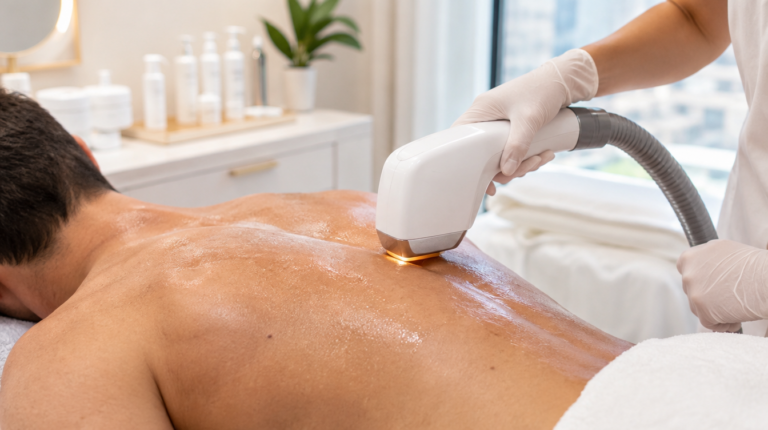
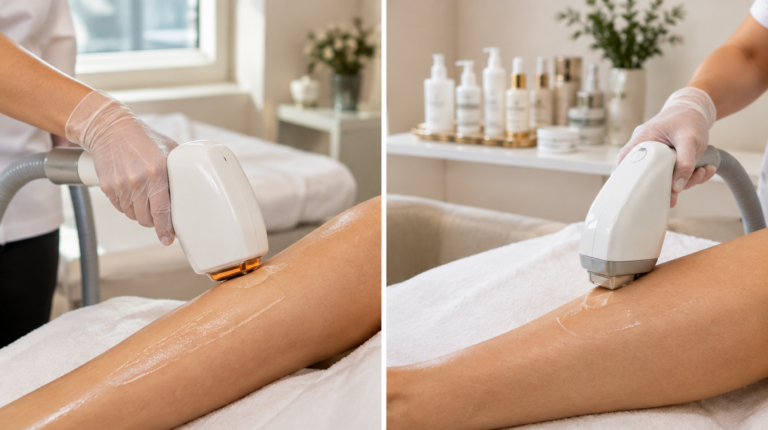
Institut V Esthétique is an esthetics clinic in Montréal that offers laser hair removal using the Clarity II by Cynosure Lutronic. The platform combines Alexandrite at 755 nm with Nd:YAG at 1064 nm, giving the esthetician both wavelengths to work with across skin types. The Clarity II laser hair removal page describes the clinic’s device and service.
The device is licensed by Health Canada (MDALL 106607) and FDA-cleared (510(k)). The licensing and clearance identify the device’s regulatory status. They do not predict how a particular person will respond, which is why wavelength choice remains connected to the individual assessment.
During planning, the esthetician can review skin phototype, hair colour and thickness, treatment area, previous hair-removal treatments and any recent change in skin tone. That information helps determine which wavelength is appropriate for the treatment being considered. The clinic also offers current promotions and a free consultation page in French for visitors who prefer that language.
The treatment area can also affect session length.
Institut V confirms that its laser treatments are painless and guarantees optimal results. These are clinic-specific service commitments. They do not mean that every person needs the same wavelength or treatment plan; those choices still depend on the assessment.
What the clinical studies measured
Two study populations help provide context for the wavelengths. A study of 948 patients with Fitzpatrick skin types I to IV examined hair-reduction response with 755 nm Alexandrite. A separate study involving Indian patients examined hair-reduction response with 1064 nm Nd:YAG. These descriptions identify the populations and treatment wavelengths covered by the studies.
The studies do not compare the two wavelengths in the same patient group, so they should not be read as a direct head-to-head comparison. Their results describe the people included in each study; they cannot tell an individual exactly what result to expect. The 755 nm study included participants across types I to IV, but the practical mapping in this article remains consistent: types I to III are paired with Alexandrite, while types IV to VI are paired with Nd:YAG. A study population is evidence to consider, not a substitute for the phototype assessment used to plan an individual treatment.
Research findings also need to be understood in context. Hair colour, thickness, the treatment area and personal history can differ from one participant to another. A result reported for a group is not a personal prediction. A consultation lets you ask how the wavelength comparison relates to your own skin and hair, without treating either study as a guarantee.
Who this comparison is for
This comparison can help if you are deciding what to ask about before laser hair removal, especially if you have a deeper skin tone, coarse dark hair or a history of hair regrowth connected with a hormonal condition such as PCOS. These examples are reasons to discuss your circumstances and goals with an esthetician; they do not determine the right wavelength on their own.
People often search for “permanent hair removal.” Laser treatment is more accurately described as permanent hair reduction. The goal is to reduce unwanted hair over time, rather than promise that every follicle will stop producing hair permanently. Hair colour and thickness, phototype, treatment area and prior treatment history all help shape what a reasonable plan may look like.
If your skin tone changes between appointments, mention it before treatment. The same applies if you have recently tanned or if your hair growth pattern has changed. These details help the esthetician reassess the treatment area and wavelength, rather than relying only on what was observed at an earlier visit.
Frequently asked questions
Can my wavelength change between sessions?
Your esthetician can review your skin and hair before treatment and consider whether the wavelength remains appropriate. If your skin tone has changed, or if you have new information about previous treatments, share it before the appointment. The assessment can take those changes into account when planning the next step.
Does a tan affect wavelength choice?
A tan changes the appearance of the skin and is relevant to a current skin assessment. Tell the esthetician about recent sun exposure or tanning before treatment so the skin can be reviewed at that time. The assessment, rather than a fixed rule in an article, guides whether and how to proceed.
How many sessions are usually needed?
Institut V’s usual plan is 6 to 8 sessions, spaced 4 to 6 weeks apart. The treatment area and hair-growth pattern are part of planning the series. This is a typical clinic schedule, not a promise that every person will need exactly the same number of appointments.
Does laser hair removal mean every hair is gone?
No single wording should promise that every treated follicle will stop producing hair. People commonly use “permanent hair removal” as a search term, but the more accurate description is permanent hair reduction. A consultation can help set expectations for your goals and discuss a plan based on your skin and hair.
Conclusion
Alexandrite and Nd:YAG differ in how their wavelengths interact with melanin. In this comparison, Fitzpatrick types I to III are paired with Alexandrite 755 nm, and types IV to VI with Nd:YAG 1064 nm. The 948-patient and Indian-patient studies add context for those wavelengths, while an individual assessment remains essential for choosing a suitable approach.
To discuss your skin, hair and treatment area with Institut V, call (438) 900-0919 or use the online reservation page. You can also book your free consultation.