Key Takeaways
- Laser hair removal can help prevent ingrown hairs from recurring by progressively reducing regrowth; it does not instantly release a trapped hair or treat an active infection.
- An ingrown hair grows beneath the skin or curls back into its follicle, which can cause a bump, redness or inflammation.
- Institut V Esthétique uses Lutronic Clarity II, combining Alexandrite 755 nm and Nd:YAG 1064 nm to adapt settings for skin phototypes I to VI.
- Waxing, tweezing and epilators should be avoided during a laser protocol because they remove the hair the laser needs to target.
- Institut V Esthétique welcomes you at 6532 Rue Beaubien Est in Montreal; a consultation assesses the skin, hair and affected area.
Why does reducing hair regrowth help limit ingrown hairs?
By progressively reducing the density and thickness of regrowing hair, laser treatment decreases the number of hairs that may curl or remain trapped beneath the skin. It targets melanin in the hair within the follicle to reduce the amount of hair that grows back over a series of sessions. Less regrowth also means fewer hairs that may trigger inflammation after shaving.
Results depend on several factors: hair pigment and thickness, skin phototype, treatment area, hormonal factors and the phase of the hair growth cycle. Learn more about laser hair removal in Montreal. The realistic goal is long-term hair reduction, not a promise that every ingrown hair will permanently disappear.
| Factor | What to know | Impact on the protocol |
|---|---|---|
| Dark, pigmented hair | Melanin is the laser’s target | Response is generally more predictable than with white, grey, red or very light-blond hair |
| Skin phototype | Skin and hair must be assessed together | The wavelength and settings are adapted to the complexion |
| Shaving | It cuts the hair at the surface without pulling it out | It is generally compatible with the protocol when performed according to instructions |
| Waxing, tweezing or epilating | They remove the hair from the root | They should be avoided between sessions so the laser target remains present |
| Painful bump, pus or significant inflammation | An infection or another condition may be present | Postpone treatment on the area and seek advice from a healthcare professional |
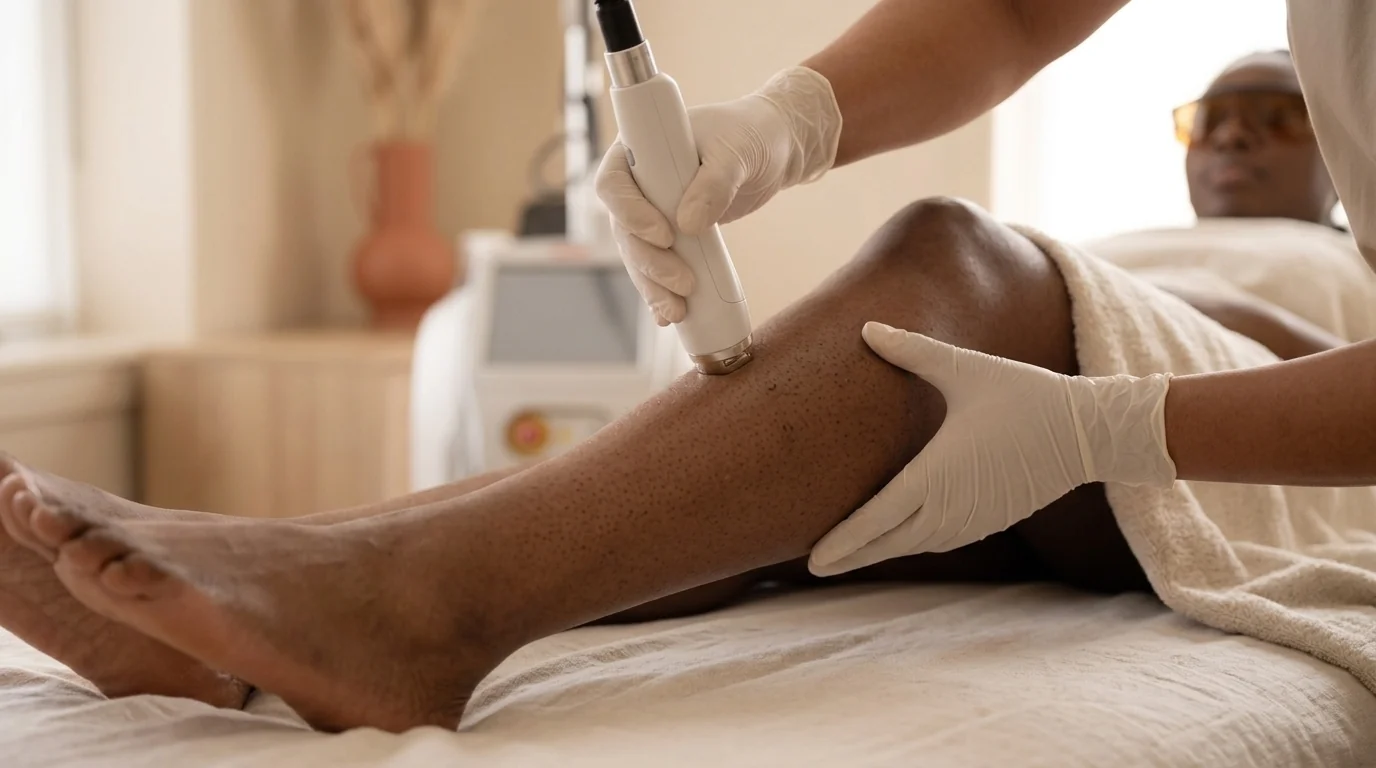
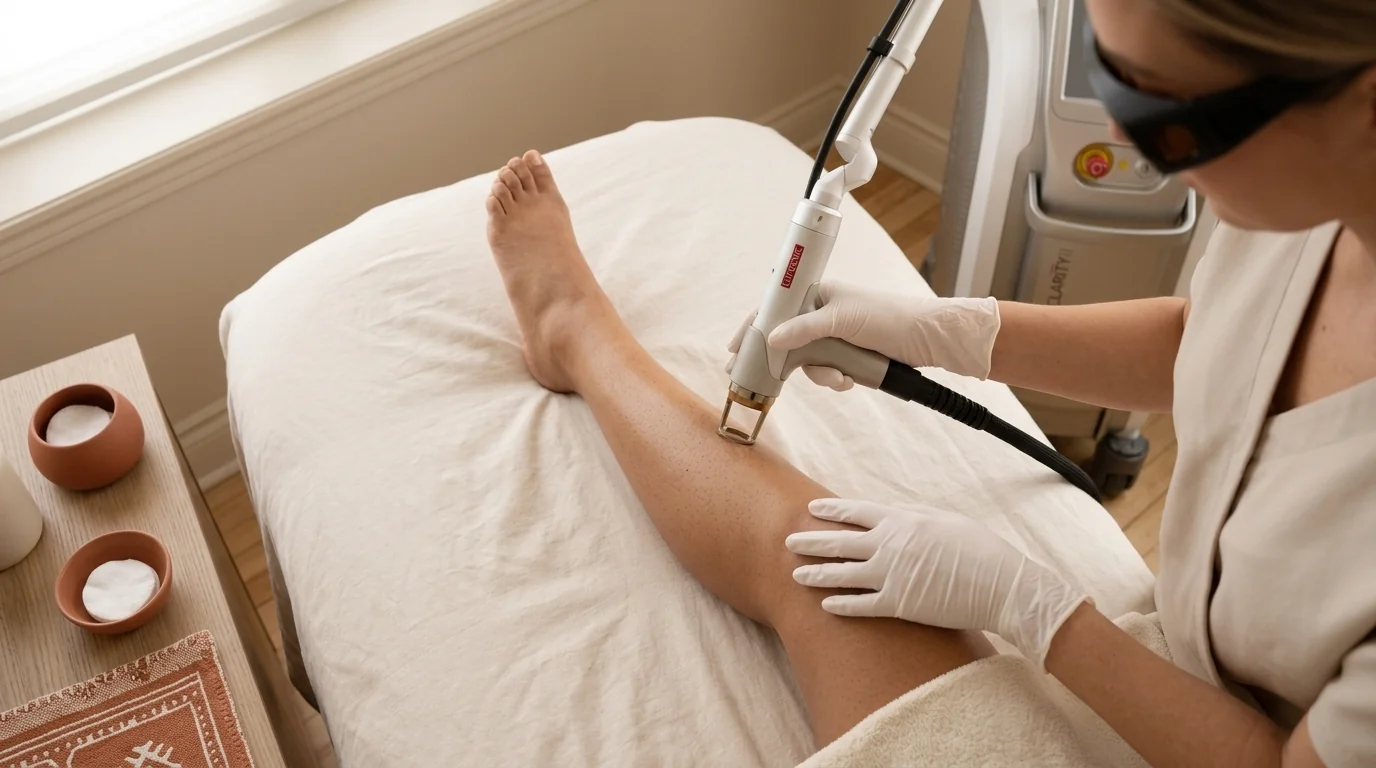
Lutronic Clarity II combines Alexandrite 755 nm and Nd:YAG 1064 nm. These dual wavelengths allow the Institut V team to adapt treatment for phototypes I to VI after an assessment. To understand the approach used for deeper complexions, visit our page on laser hair removal for dark and Black skin.
How can you prevent ingrown hairs before and after laser treatment?
To limit irritation and preserve the laser target, avoid pulling hair from the root, follow the shaving instructions and report any active lesion before your appointment. Simple preparation and gentle aftercare help the skin recover without adding unnecessary friction.
- Before treatment: avoid waxing, tweezing and epilators; tell your esthetician about relevant medications, photosensitizing products or skin concerns.
- When shaving: use a clean blade and avoid repeatedly passing over already irritated skin; follow the timing recommended during your consultation.
- After treatment: avoid excessive heat, friction, sun exposure and irritating products for as long as the team recommends.
- Between sessions: do not pick, scratch or pop bumps; seek medical advice if you notice pus, increasing pain or other signs of infection.
Temporary redness or sensitivity can occur after laser treatment. Results and side effects vary with the individual, the laser type, the area, hair colour and skin colour. The personalized instructions provided by your esthetician therefore take priority over general advice.
Medical sources consulted: American Academy of Dermatology, Laser hair removal: FAQs; Cleveland Clinic, Ingrown Hair.
A free consultation at Institut V helps determine whether laser is appropriate for your skin, hair and the area affected by ingrown hairs.
Visit our free consultation page or call (438) 900-0919.
Frequently Asked Questions About Ingrown Hairs and Laser
Does laser remove an ingrown hair that is already present?
Laser hair removal can reduce the regrowth that causes new ingrown hairs, but it does not instantly release a trapped hair or treat an active infection. A painful, warm or pus-filled lesion should be assessed before the area is treated.
Can I wax or tweeze between laser sessions?
No. Waxing, tweezing and epilators pull the hair from the root and temporarily remove the laser’s target. Shaving is generally preferred according to the instructions provided by your esthetician.
Is laser suitable for darker skin that is prone to ingrown hairs?
Clarity II combines Alexandrite 755 nm and Nd:YAG 1064 nm to allow settings adapted to phototypes I to VI. A consultation remains essential because the response also depends on hair pigment and thickness.
How many laser sessions are needed for ingrown hairs?
The number of sessions varies by treatment area, skin phototype, hair-growth cycle and individual response. The plan is determined during the consultation; sessions are generally spaced 4 to 6 weeks apart, depending on the area and the instructions provided.
Or call us at (438) 900-0919.