Who should pause and ask first?
Laser hair removal can be a good option for many people, but an online checklist cannot decide whether a session is right for you. Pregnancy or breastfeeding, medicine use, recent sun exposure or tanning, tattoos, moles, and active skin concerns are all worth discussing before treatment. Institut V Esthétique is an esthetics clinic in Montréal. A consultation gives you time to share relevant details and ask questions before you book a series.
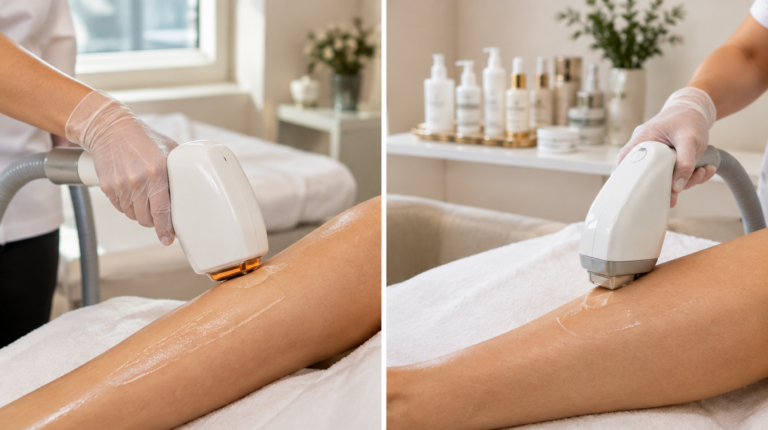
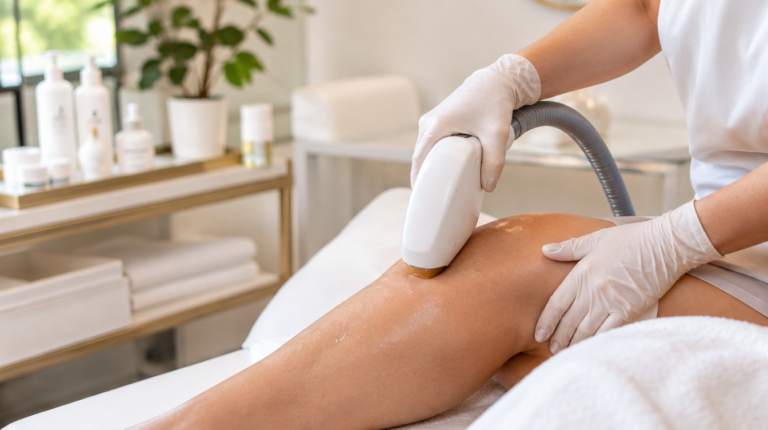
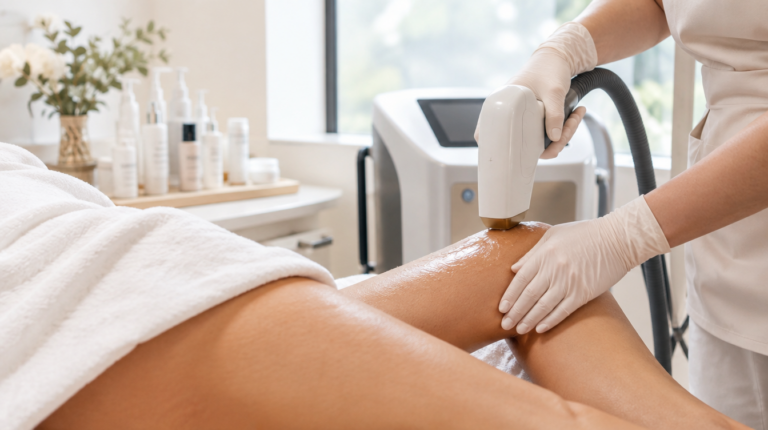
Institut V uses the Clarity II laser by Cynosure Lutronic, with Alexandrite 755 nm and Nd:YAG 1064 nm wavelengths. The device is suitable for all skin types, licensed by Health Canada, and FDA-cleared. You can read about Institut V's laser hair removal in Montreal and the device on the clinic's service page.
People often search for “permanent hair removal.” At Institut V, set expectations as permanent hair reduction: the goal is to reduce hair growth, not to promise that every hair will disappear forever. The clinic usually recommends 6 to 8 sessions spaced 4 to 6 weeks apart. Your consultation is the place to discuss the treatment area, your hair growth, and a plan that fits your circumstances.
Hair colour and skin tone both belong in the consultation. Laser treatment targets pigment in hair, so very light, white, or grey hair may respond less well; red hair can also respond differently. Skin tone alone should not be used to rule yourself in or out; the provider still needs to review the treatment area and relevant history. These are general considerations, not a way to predict your result from a photo. Ask what the Clarity II may be able to do for your specific hair, skin tone, and area.
Before you book, decide what you want the consultation to answer. You may want to ask how the provider will assess the area, which details could change the plan, and what “permanent hair reduction” means for the result you hope to achieve. If you have several areas in mind, name each one rather than assuming a discussion of one area applies to all of them. Leave time for questions about suitability and preparation before deciding whether to begin.
Pregnancy, breastfeeding, and recent tanning
If you are pregnant or breastfeeding, disclose that before a session and ask your clinician and the laser provider whether treatment should wait. Do not use a general checklist as medical clearance or assume that someone else's timing applies to you. If you have recently given birth or finished breastfeeding and are considering treatment, ask about resuming at your consultation rather than choosing a date from online advice.
Recent sun exposure, an active tan, or self-tanner should also be mentioned before treatment. A tan can change the appearance of the skin in the treatment area, so the provider needs to know what has changed and when. Describe your exposure honestly and ask whether the clinic recommends proceeding or postponing. Do not conceal a tan because you are concerned it will delay your plan.
Changes in your outdoor plans can matter when you are scheduling a series. If a trip or an extended period outdoors is coming up, mention it during the consultation so you and the provider can discuss a plan that fits those dates. The preparation section below covers sun protection for each session.
Medicines and isotretinoin: ask before treatment
Tell the clinic about prescription medicines, non-prescription products, and topical treatments you use, especially if the label or your prescriber has warned that they may affect sensitivity to light or skin healing. Include isotretinoin, also known as Accutane, whether you are taking it now or took it in the past. A medication can matter even when it seems unrelated to hair removal.
Ask your prescriber whether your medication affects laser treatment, and mention it at the free consultation. Do not stop a prescribed treatment, skip doses, or change how you take it just to fit a laser appointment. Avoid relying on a fixed medication or isotretinoin wait from a general checklist.
Before the consultation, make a current list of the medicines and skin products you use. Include the name and, if available, how often you use each one. If you are unsure whether something counts, include it and ask. Health Canada's operator guidance calls for attention to medical history and medications, including isotretinoin, which is one reason a complete discussion is more useful than a yes-or-no answer from a short checklist.
Tattoos, moles, and skin conditions in the treatment area
Point out every tattoo in or near the area you want treated, including faded tattoos. The provider needs to see where the pigment is before planning the treatment area. Do not assume that an old tattoo is invisible to the laser or that a small one can be ignored. Ask how the treatment area will be mapped and whether the plan needs to leave space around the tattoo.
Show the provider moles, dark marks, and any skin changes within the area. Moles may need individual attention before surrounding skin is treated. If a mark is new, changing, or worrying you, have it assessed by an appropriate health professional before asking a laser provider to work around it. Laser hair removal is not a skin examination or a diagnosis.
Tell the provider about eczema, psoriasis, rosacea, irritation, infection, open skin, or a recent flare in the area. Describe what is happening and whether you are receiving care for it. An active concern may affect whether a session should go ahead that day, but it does not automatically mean you can never have laser hair removal. Ask what should happen next and whether you should return after the area has been assessed or settled.
These details are useful because an operator needs to know what is present in the treatment zone and what could affect the plan. A clear conversation can help you avoid guessing about a mole, tattoo, or flare-up on your own. If you have multiple concerns, group them into one list for your consultation so none are missed.
If laser is postponed, ask about waxing
If you cannot proceed with laser right now, waxing may be a separate grooming option to discuss. Institut V offers waxing services. Whether it suits you depends on your skin and the reason laser has been postponed, so do not assume that every medication or skin concern makes waxing appropriate. Tell the esthetician what is affecting your laser plan before choosing another service.
Waxing removes hair from the root, while laser treatment is planned around the hair follicle. If you expect to start or continue laser, use the preparation section below for the timing between root-removal methods and a session. If you are unsure how to manage hair in the meantime, ask the clinic which option fits your treatment plan.
Waxing can be worth discussing if you are waiting for your prescriber to advise on medication, allowing a skin concern to be assessed, or deciding whether you want a laser series. It is also a choice for someone who is not ready to plan several appointments. The key is to explain your situation before the service so the esthetician can help you decide whether waxing is suitable at that time.
How to prepare once you are eligible
Use the consultation to agree on practical steps for your specific treatment area, including how the provider will review your skin and hair and what instructions apply to your appointment. Ask how to contact the clinic if something changes between visits. At the next appointment, raise any new health or skin information before treatment begins; the earlier assessment is not a substitute for describing a change.
If you have had another light-based treatment, note which area was treated and how your skin responded. If you have not, say so and ask the provider to explain the steps and how to raise a question afterward. This gives the consultation a clear starting point without relying on someone else's experience or online anecdotes.
- Avoid direct sun exposure for 2 weeks before and 2 weeks after each session.
- Stop waxing, plucking, and threading at least 4 weeks before a planned laser session. Ask the clinic if you need an interim grooming option.
If a question is about skincare, shaving, or another grooming method that is not covered in your instructions, contact the clinic before making changes. The same applies when you are unsure whether a new concern belongs to the treatment area. It is easier to adjust the plan before treatment than to guess during the appointment. Write down the agreed steps so they are easy to follow.
Sources and your next step
This checklist draws on Health Canada's 2011 operator guidance and Institut V's published service information. The links below let you review the operator guidance and the clinic pages directly.
- Health Canada: 2011 laser hair removal safety guidelines for owners and operators
- Institut V's laser hair removal service page
- Institut V's free consultation page in French
- Institut V's waxing service page
For current offers, see Institut V's current promotions. You can also use the online reservation page when you are ready to schedule.
The free consultation is with Alexandra Vivanco, the clinic's founder and head esthetician. Call (438) 900-0919 or Book your free consultation at Institut V.